For Everyone
How to Run a Successful YouTube Sponsorship - The Complete Guide
Running a YouTube sponsorship can feel overwhelming if you've never done it before. Whether you're a brand looking to work with creators or a YouTuber landing your first deal, understanding how collaborations actually work is key to success.
This guide is based on real experience from 150+ sponsored videos and 35+ different sponsors. We'll walk you through every step, from first contact to payment, with practical advice for both sides of the table.
Understanding Sponsorship Formats
Before diving into the process, let's clarify the two main types of YouTube sponsorships.
Integration (1-2 minutes)
The most common format. A sponsored segment within a regular video, typically lasting 1 to 2 minutes. The creator makes their usual content and includes a natural transition to the sponsored message.
Key characteristics:
- Placed in the first third of the video (up to halfway max)
- Requires a natural "bridge" between content and sponsor message
- Creator proposes a video concept they actually want to make
- The sponsor fits into the narrative, not the other way around
Dedicated Video
A video entirely focused on the sponsor's product or service. Much rarer because it requires:
- A strong fit between the brand and the creator
- A genuinely interesting video concept (not just a product showcase)
- Avoiding the "walking billboard" effect
The reality: Dedicated videos pay significantly more, but they don't necessarily convert better for sponsors. The industry trend is moving toward integrations because they feel more authentic and perform well.
Pro tip for creators: Only accept dedicated videos if you have a great idea that genuinely excites you. Your audience will feel it if you're just doing it for the money.
| Integration | Dedicated Video | |
|---|---|---|
| Format | 1-2 min segment in video | Entire video about the brand |
| Frequency | ~90% of deals | ~10% of deals |
| Brand fit needed | Natural fit | Strong fit required |
| Pricing | Standard rates | Premium rates (2-3x) |
| Conversion | Strong & authentic | Not necessarily better |
| Risk of flop | Low (content carries it) | Higher ("walking billboard") |
Step 1: First Contact
The beginning of every collaboration. This is where most deals are won or lost.
What Makes a Good First Message
For Sponsors reaching out to creators:
✅ Do:
- Show you actually know their channel and content
- Explain briefly what you do and why it's a good fit
- Keep it short and direct
- Use a company email (CEO, founder, or official domain)
- Let them know you found them through Meet Sponsors or your own research
❌ Don't:
- Send a lowball offer upfront (better no number than a bad number)
- Use an intermediary or agency email
- Send generic copy-paste messages
- Pitch drop-shipping or sketchy products
- Get their name or channel wrong
Why direct contact matters: Creators are wary of intermediaries. Agencies often mean lower budgets (they take a cut) and more friction. When a founder or marketing lead reaches out directly, it signals serious intent and better rates.
For Creators reaching out to sponsors:
- Combine multiple channels: start with email, follow up elsewhere
- Research the right contact person
- Show genuine interest in the product
- Be professional but personal
Good vs Bad Outreach: Real Examples
Here's what a good and bad first email actually look like:
❌ Bad Email:
Subject: Partnership opportunity
Hi,
We're reaching out on behalf of our client BrandX. We'd like to offer you $200 for a 60-second integration in your next video. Please let us know if you're interested.
Best, Agency Team
Why it fails: Generic, lowball offer upfront, sent by an agency (intermediary), no personalization, no mention of the creator's content.
✅ Good Email:
Subject: Loved your video on [specific topic]
Hey [Creator name],
I'm [Name], founder of [Product]. We build [one sentence about the product].
I've been watching your channel for a while — your video on [specific video] really resonated with our audience. I think there could be a natural fit between what you do and what we're building.
Would you be open to exploring a sponsored integration? Happy to share more details and hear your rates.
Cheers, [Name] — [product website]
Why it works: Personal, from the founder directly, shows they know the channel, explains the fit, doesn't lowball, asks for the creator's rates.
Red Flags to Watch For
For Creators:
- Lowball offers in the first message
- Intermediaries and agencies
- Drop-shipping products
- Getting your name/channel wrong
- Unrealistic timelines
For Sponsors:
- Creators who don't ask questions about your product
- Immediate "yes" without understanding the brief
- No media kit or professional materials
- Unrealistic promises about views/conversions
What Creators Expect
YouTubers typically have about 2 weeks of visibility on their content calendar. They value:
- Speed: Quick back-and-forth, decisions in days not weeks
- Flexibility: Room to be creative, not rigid scripts
- Minimal calls: Most prefer settling things over email
- Direct communication: No layers of approval
For Sponsors: If a creator senses the collaboration will be slow or bureaucratic, they might not respond at all. Be ready to move fast.
Step 2: Negotiation
Once both parties are interested, it's time to talk numbers and terms.
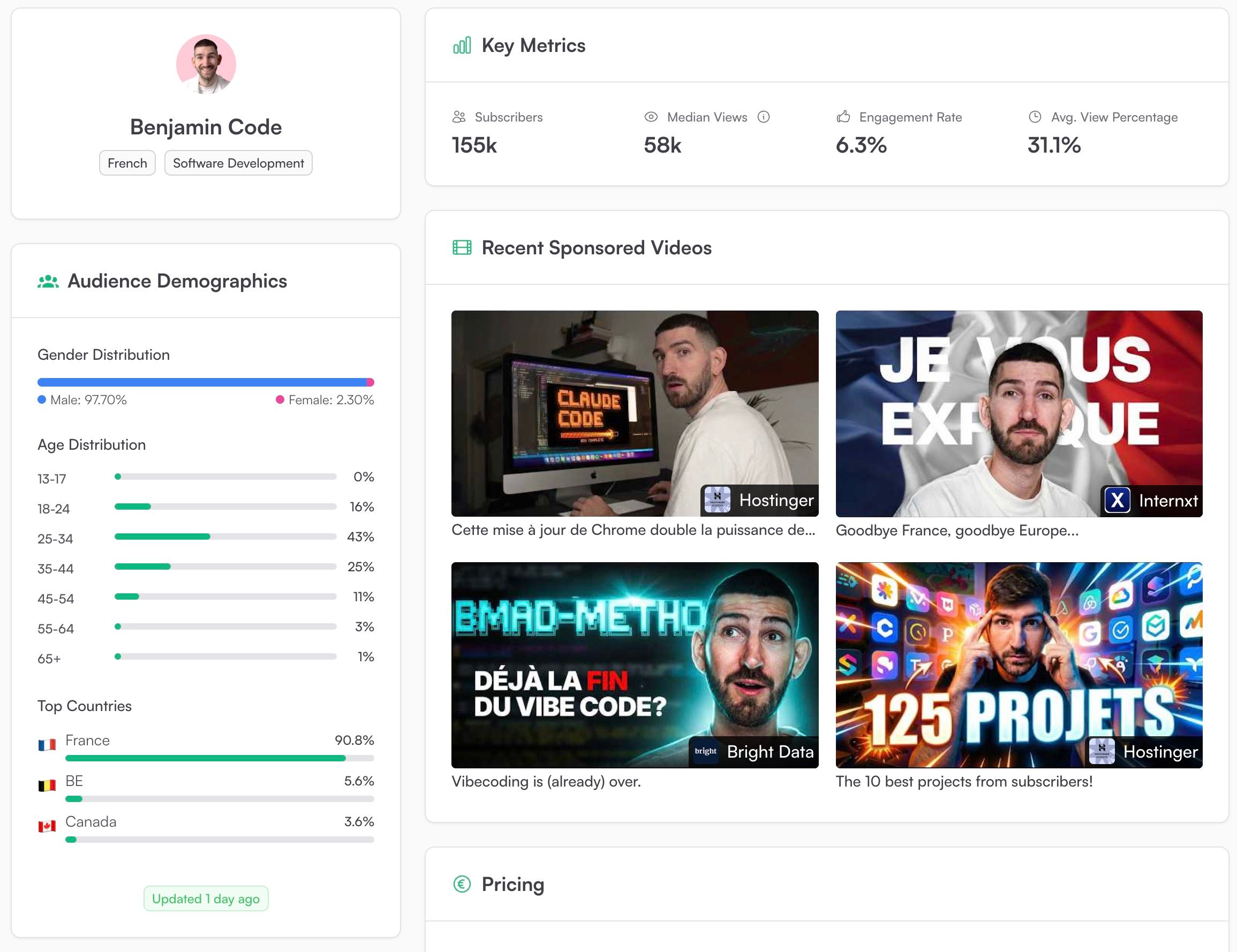
The Media Kit
Creators typically send a media kit containing:
- Channel statistics (subscribers, average views)
- Audience demographics (age, gender, location)
- Engagement rates
- Rate card: prices for different formats (1 min, 1.5 min, 2 min integration, dedicated video)
Meet Sponsors helps creators generate media kits by connecting their YouTube Analytics. If you don't have one yet, this is a must-have for professional negotiations.
Pricing Discussion
For Sponsors:
- If you include a price in your first message, make sure it's competitive
- A low offer can end the conversation immediately
- Use tools like Meet Sponsors to understand typical rates for a creator's size
- Budget for the value, not just the subscriber count
For Creators:
- Know your worth based on your niche and engagement
- Don't undersell yourself, but be realistic
- Consider package deals for recurring collaborations
What Gets Negotiated
Beyond the base price, these elements are often discussed:
| Element | What it means |
|---|---|
| Exclusivity | Can't work with competitors for X months |
| Usage rights | Can the sponsor reuse your content in ads? |
| Duration | How long must the video stay up with links? |
| Deliverables | Description text, pinned comment, social posts |
| Timeline | When will the video go live? |
Important notes:
- Exclusivity costs extra. If a sponsor wants you to avoid their competitors, that's a premium.
- Usage rights cost extra. If they want to run your clip as a paid ad, negotiate separately. You lose control over how it's used and shown.
- Long-term deals benefit everyone. Sponsors get better rates, creators get recurring revenue. Aim for 3-video packages when possible.
Step 3: The Creative Brief
Once terms are agreed, it's time to plan the actual content.
How It Works
- Sponsor shares their requirements:
- Key messages they want communicated
- Specific features or benefits to highlight
- Visual elements they'd like shown
- Any mandatory talking points
- Creator proposes a video concept:
- A topic they genuinely want to cover
- The "decisive pass": how they'll transition to the sponsored segment
- Why it makes sense for their audience
- Both parties align on the approach
The Sponsor's Role
You control: The sponsored segment content and the transition to it.
You don't control: The rest of the video. Trust the creator's judgment on what works for their audience.
For Sponsors: Don't try to dictate the entire video. Creators know their audience better than you do. Focus your feedback on the sponsored segment itself.
The Creator's Role
Your job: Write a compelling 1-2 minute segment that genuinely sells the product while fitting your style.
Pro tip: Don't phone it in. A lazy sponsored segment reflects poorly on you AND hurts the sponsor's results. Put real effort into making it engaging.
The Brief Process at a Glance
| Step | Who leads | What happens |
|---|---|---|
| 1. Requirements | Sponsor | Shares key messages, visuals, talking points |
| 2. Video concept | Creator | Proposes a topic + the "decisive pass" transition |
| 3. Alignment | Both | Agree on approach, tone, and placement |
| 4. Script review | Sponsor | Validates the sponsored segment wording |
| 5. Green light | Both | Ready to film |
Step 4: Production & Validation
Now it's time to actually make the video.
The Smart Way to Film (For Creators)
Separate your sponsored segment from your main content:
- Film your regular video in your normal flow
- Film the sponsored segment separately (different setup, different energy)
- This keeps you in your creative zone and gives the sponsor time to validate
Why this works:
- You don't break your creative flow
- The sponsor gets a clear segment to review
- Edits are easier if changes are needed
- The visual "break" can actually help viewers transition
Sponsor Validation
Before publication, sponsors typically review:
- The full video (can be a rough cut)
- The sponsored segment in detail
- The description text and pinned comment
For Creators: Build this into your timeline. Send the video 1-2 days before your planned publish date. This gives the sponsor time to request changes without derailing your schedule.
For Sponsors: Be reasonable with your feedback. Focus on:
- Accuracy of information about your product
- Quality of the sponsored segment (visuals, energy, clarity)
- Mandatory elements (links, mentions, disclosures)
Don't nitpick the rest of the video. That's not what you're paying for.
Production Timeline
| Day | Task | Who |
|---|---|---|
| D-7 | Film the main video | Creator |
| D-6 | Film sponsored segment (separate setup) | Creator |
| D-5 | Edit full video + integrate sponsored segment | Creator |
| D-3 | Send rough cut to sponsor for review | Creator |
| D-3 to D-1 | Sponsor reviews, requests changes if needed | Sponsor |
| D-1 | Final adjustments | Creator |
| D-Day | Publish | Creator |
Step 5: Publication
The video is approved. Time to go live.
Mandatory Elements
In the video:
- Clear disclosure that it's sponsored (required by law in most countries)
- The sponsored segment in the agreed position (first third to first half)
On YouTube:
- ✅ Check "includes paid promotion" in video settings
- Add "Ad" or "Sponsored" mention where required by local law
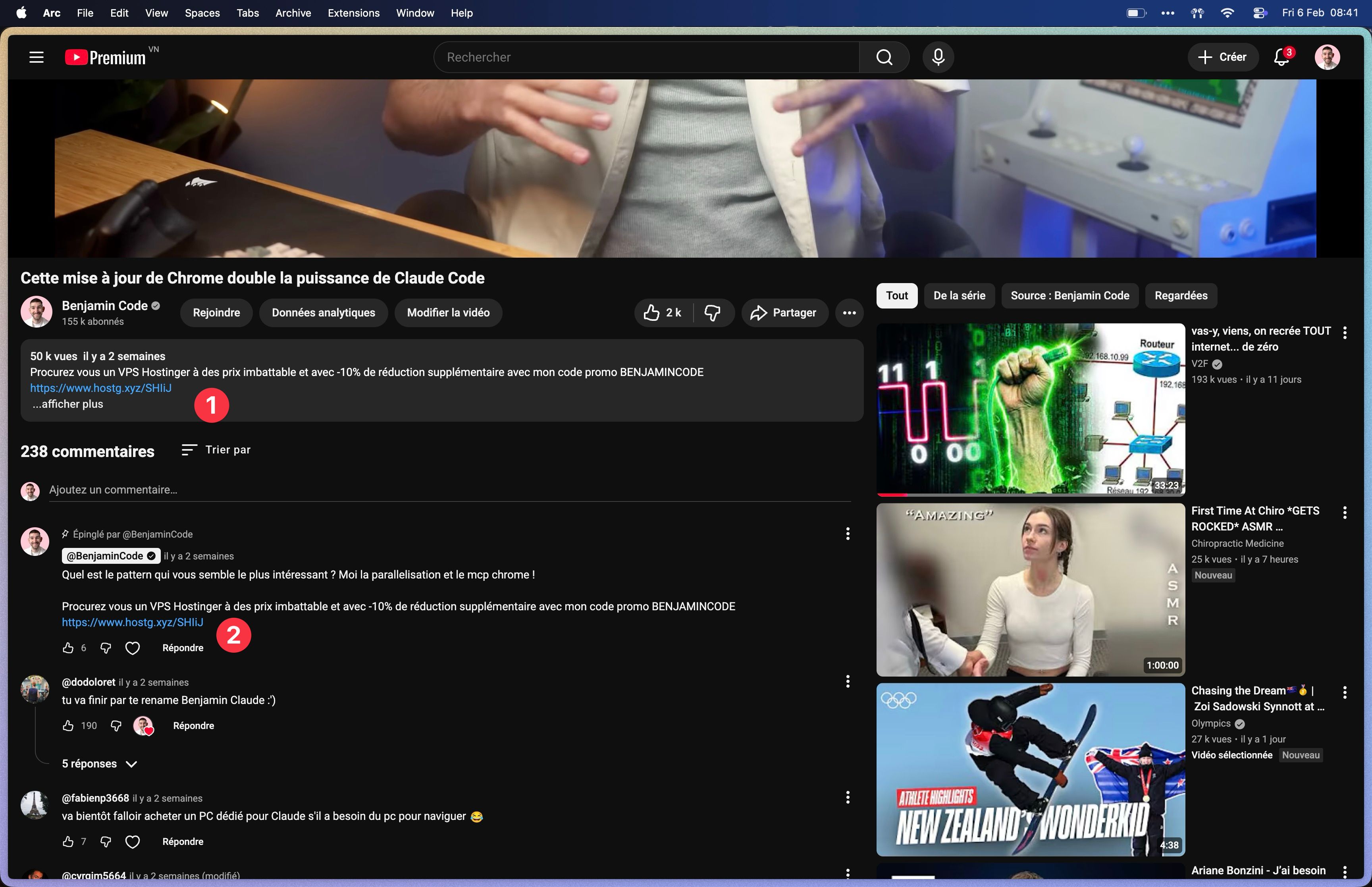
In the description:
- Sponsor mention and thank you at the top (visible without clicking "show more")
- Tracked link provided by the sponsor
- Any required hashtags or disclaimers
In the pinned comment:
- Personal message from the creator
- Sponsor mention with link
- Must be visible before the "Read more" fold
For Sponsors: If the sponsor mention is hidden below the fold in description or comments, ask the creator to fix it. Visibility matters.
Content Duration Requirements
Typical agreements require keeping the video up with:
- Original description and links
- Pinned comment intact
- No edits to the sponsored segment
Common durations: 6 months, 1 year, or 2 years depending on the deal.
Step 6: Payment
The video is live. Time to get paid.
How It Works
- Creator sends an invoice after publication
- Sponsor pays according to contract terms (immediate, net 30, etc.)
Avoiding Payment Issues
For Creators:
- Always have a signed contract before filming
- Work directly with brands when possible
- Be wary of intermediaries (agencies that might disappear with the money)
- Keep records of all communications
For Sponsors:
- Pay on time. Your reputation in the creator community matters.
- Clear payment terms in the contract prevent misunderstandings.
Real talk: In 150+ sponsored videos, only ONE payment issue occurred—and it was with an intermediary agency, not a direct brand contact. Direct relationships are safer for everyone.
Building Long-Term Partnerships
The best sponsorships aren't one-offs. Here's how to build lasting relationships.
Why Recurring Deals Win
For Sponsors:
- Better rates (volume discounts)
- Deeper audience familiarity with your brand
- More authentic endorsements over time
- Data to optimize your approach
For Creators:
- Predictable revenue
- Less time spent on negotiations
- Stronger portfolio of brand relationships
- Better content (you know the product well)
The Randomness Factor
YouTube is unpredictable. A video might:
- Underperform: Even great creators have flops. It's not anyone's fault.
- Overperform: A surprise hit means you paid for 50K views and got 500K.
For Sponsors: Don't judge a creator by one video. Test with 2-3 videos before deciding. And remember: creators always want their videos to perform. They're not sabotaging your campaign—their reputation depends on good content.
Meet Sponsors shows median views across the last 5 sponsored videos to help you set realistic expectations.
Quick Reference Checklist
For Sponsors
- Research creators thoroughly before reaching out
- Send personalized outreach from a company email
- Don't lowball in your first message
- Be flexible on creative direction
- Review only what matters (the sponsored segment)
- Pay on time, every time
- Think long-term, not one-off
For Creators
- Have a professional media kit ready
- Know your rates and stick to them
- Propose concepts you actually want to make
- Build sponsor validation into your timeline
- Put real effort into sponsored segments
- Respect legal disclosure requirements
- Invoice promptly after publication
Start Your First Collaboration
Whether you're a sponsor looking for creators or a creator looking for brands, Meet Sponsors helps you find the right match.
For Small Players & Brands:
- Find creators who match your niche and budget
- See estimated rates before reaching out
- Generate personalized outreach emails
- Track your contacts and conversations
For YouTubers:
- Discover sponsors in your niche
- See who's actively working with creators like you
- Generate your media kit from YouTube Analytics
- Find sponsors before they find your competitors
Ready to start? Explore Meet Sponsors →
This guide is based on real experience from 150+ sponsored videos. Have questions? Reach out to us on Twitter @benjamincode.